If there is an American adage, this is it. The saying is meant to imply that when times are tough, those willing to try harder will succeed. The American creed is about doing and doing it better, faster, and more powerfully.
In World War II General Patton was able to surprise the Nazis time and time again with his superhuman expectations of his troops and their superhuman delivery on those expectations. His Third Army moved faster, covered more ground, surprised more enemy and conquered more territory in less time than any army in history.
When those troops who survived came home to America, they put that work ethic to work rebuilding our economy. Today, American troops returning from Iraq and Afghanistan have less opportunity to find jobs because expanding American companies have become multinational entities and have shipped jobs abroad that our returning troops might have gotten in the good old days of post-WWII America. While the troops stay loyal to America and continue to risk their lives for our freedom, our largest corporations have abandoned loyalty for profit. Wherever corporations can make profit by lowering labor costs, that is where corporate America goes, and calls it euphemistically a “business decision”; as if that label excuses any hint of abandonment, disloyalty, and lost opportunity for American workers.
The motto of the 21st Century corporation is a corollary to Vince Lombardi’s famous line: “Winning isn’t everything, it’s the only thing.” Today multi-national corporations seem to have adopted the notion that “profit isn’t everything, it’s the only thing.” Once you no longer belong to a country, I guess you lose your loyalty. That’s why so many corporations seek tax shelters off shore.
Whatever happened to corporate civic responsibility? Here is what happened: Corporations got larger; pleasing stockholders became a short-term rather than a long-term goal; labor became expendable rather than honored; and economies became global rather than national. The local company in the local community became obsolete.
While factories were being exported, schools were turned into factories producing athletes and scholars, and the rest be damned. If you were not on a college track either through athletics or academics, you were left behind to pick up skills on your own or you were taught skills that were obsolete by the time you got to the work place.
Meanwhile, the workforce doubled without counting immigrants or population growth. Women entered the work force with the zeal and determination of first generation immigrants, the kind of work ethic we see most noticeably among Mexican and Asian immigrants today.
At the same time, traditional labor jobs disappeared, service jobs exploded. Brains replaced brawn, and women, by and large, fit the bill better than men. Today the American male, by and large, faces a bleak future. Sixty percent of college degree earners at all levels are women. Young men, in many cases, are left behind to hang around sports bars, drink beer, and behave foolishly as TV sports ads teach them to behave.
Unless corporate America starts taking serious responsibility for the unintentional but nonetheless devastating neutering of the average American male, we will be headed for disaster as a culture. Black males are the canary in the mines. They are already in dire straits in great numbers. The rest of the male population is not far behind.
I call on the Republican politicians to stop deceiving America and themselves by preaching the problem will be solved by lower taxes. Lower taxes will not solve unemployment if the educational system is broke and broken already and there is a large pool of unemployable (skill-less) folks out there in America. Lowering taxes is the economic equivalent of blood-letting.
I call on Democrat politicians to stop deceiving America and themselves by preaching the problem will be solved by more spending. We are in debt up to our gills and headed for default if we don’t change the trajectory of our debt toward a soft landing somewhere in a definable future.
I call on the Tea Party to stop deceiving America and themselves that suddenly shrinking government and so-called entitlements is a solution to our debt crisis. That is like trying to land a jumbo jet on an aircraft carrier. It won’t augur well; it will auger in. A long runway and a soft landing is the only way to land massive flying machines.
I call on the Wall Street to come up with a new derivative that makes civic responsibility and loyalty to Americans a foremost priority in investment. Instead of measuring success selfishly in terms of dollars earned, why not start playing a game that awards bonuses to those investment bankers who have done the most good for Americans and America in a given year as measured by a panel of foundation presidents who assess those values. Maybe that will be enough incentive to tip Wall Street back in the direction of “doing God’s work” in a real sense rather than a cynical one.
We are facing tough times. Isn’t it time we saw some trickle down “civic responsibility” on the part of corporations and Wall Street bankers to see who can do the most for America rather than pad the purses of the “already-have-alots”?
* Attributed to Joseph P. Kennedy
Showing posts with label cleaning up Wall Street. Show all posts
Showing posts with label cleaning up Wall Street. Show all posts
Wednesday, November 9, 2011


Tuesday, November 2, 2010
Trickle, Trickle, Little Drip
Trickle, trickle, little drip;
All I want is just a sip;
Tip the pot and you’ll be hip;
Oh a drop to touch my lip.
Wall Street, let me earn some cash;
Let me forage through your trash;
All my dreams have turned to ash;
Government’s fault there was a crash.
Throw the tea into the bay;
Keep the taxes low, you say;
Help the rich to never pay;
Keep them rich, come what may.
Wear your cute tri-cornered hat;
Austerity is where it’s at;
Drink their Kool-Aid; chew their fat;
Will you never smell a rat?
So keep the tempest teapot strong;
And keep that sense that you belong;
Perhaps you’ll wake before too long
And figure out that you were wrong.
All I want is just a sip;
Tip the pot and you’ll be hip;
Oh a drop to touch my lip.
Wall Street, let me earn some cash;
Let me forage through your trash;
All my dreams have turned to ash;
Government’s fault there was a crash.
Throw the tea into the bay;
Keep the taxes low, you say;
Help the rich to never pay;
Keep them rich, come what may.
Wear your cute tri-cornered hat;
Austerity is where it’s at;
Drink their Kool-Aid; chew their fat;
Will you never smell a rat?
So keep the tempest teapot strong;
And keep that sense that you belong;
Perhaps you’ll wake before too long
And figure out that you were wrong.
Tuesday, April 20, 2010
Wall Street's Wilderness
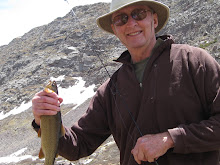
The SEC has no intention of winning the case against Goldman Sachs. It only wants to prove that is has insufficient tools by which to manage Wall Street. The key is to get Goldman Sachs to take the bait and fight the case. How to keep Wall Street on the hook for this fight is going to take some canny fly-fishing on the part of the SEC. If Goldman Sachs were a smart cutthroat trout, it would not take the bait and would simply buy off the fishermen, forcing the SEC to play catch and release. Fighting the SEC and then wriggling off the hook will only lead to greater measures of control in the future. Let’s hope Goldman fights all the way.
The Masters of the Universe, a term used by Tom Wolfe in Bonfire of the Vanities to describe the self-image of high rolling Wall Street investment bankers, is the modern manifestation of the rugged individual taming the American wilderness in the 18th and 19th centuries. Instead of the forest and the Indians, the modern Natty Bumppo has a world economy to conquer. He fashions tools such as derivatives and credit default swaps instead of animal snares and saw mills. Since the physical wilderness is no longer a viable medium for heroic exploit, the emerging and increasingly complex global economic wilderness is the only wilderness left where individuals with the capacity to cut paths to riches are able to hack their way to glory and success. The physical wilderness, meanwhile, has been mostly set aside for worship and recreation, except where oil and gas may exist.
There is something in the American psyche that loves the single combat warrior, an ancestor to the master of the universe concept and also identified in another Tom Wolfe book called The Right Stuff. We canonized that warrior in our stories and then movies about Davey Crockett, Daniel Boone, the Lone Ranger, and a host of John Wayne or Clint Eastwood characters. Gradually they were urbanized and began seeking justice on the streets instead of on the prairie or in the woods. But they were always associated with justice for the little guy against the monstrous forces of unbridled or corrupt power. By the late 20th Century, we even saw women in the role with the production of Erin Brockovich and Norma Rae.
Today, the combat warriors of Wall Street are no longer single or heroic. They work for too-big-to-fail banks; they are faceless like the Lone Ranger, but they serve themselves and their employer and not the little guy or justice. Their only defense for their greed is a rationalization called “trickle down” economics.
The sea was once a wilderness as well as the forest and the prairie. Herman Melville captured its wonder and seeming limitlessness in his epic novel Moby Dick. At one point in the novel an African-American character named Fleece, the Pequod’s 90 year old cook, is coaxed by Stubb, the playful, teasing, and cruel second mate, into giving a sermon to the sharks that are tearing into Stubb’s whale tied along side of the ship. The sermon, in essence, is as follows:
“Your woraciousness, fellow-critters, I don’t blame ye so much for; dat is natur, and can’t be helped; but to gobern dat natur, dat is the pint. You is sharks, sartin; but if you gobern de shark in you, why den you be angel; for all angel is not’ing more dan de shark well goberned…Don’t be tearin’ de blubber out your neighbor’s mout, I say…I know some o’you has berry brig mout, brigger dan oders; but den de brig mout is not to swaller wid, but to bite off de blubber for de small fry ob sharks, dat can’t get into de scrouge to help demselves.
Stubb then calls Fleece’s sermon Christianity, but Fleece loses patience with the sharks and condemns them for their uncontrollable greed which will lead to their deaths by gluttony. The sermon also foreshadows Ahab’s uncontrollable rage against the great white whale.
While Wall Street likes to see itself as a collection of hunters and gatherers in an economic wilderness or on an open sea of opportunity, unfettered by rules and laws, it has a higher duty to deliberately assure that the small fry get their needs met and not simply assume that some crumbs fall off their table. They also need to make sure they are not pursuing phantom whales as they harvest the bounty of the new economic wilderness and that their weapons are not financial boomerangs which end up circling back, attacking their clients and eventually themselves.
Given human nature, we know beyond any doubt that self-government and an appeal to higher duty seldom works. Something larger than ourselves needs to be in place to provide the rules by which we play safely. The best thing we have come up with so far is representative government. Too often, however, we end up electing or appointing the same sharks that have wreaked havoc with our economic well being.
We don’t need big government or small government but rather good government run by good people. The kinds of people we do not want in government are voracious sharks or especially sleek barracudas who pretend to care for the little guys and then feed on them all the way to the bank.
The Masters of the Universe, a term used by Tom Wolfe in Bonfire of the Vanities to describe the self-image of high rolling Wall Street investment bankers, is the modern manifestation of the rugged individual taming the American wilderness in the 18th and 19th centuries. Instead of the forest and the Indians, the modern Natty Bumppo has a world economy to conquer. He fashions tools such as derivatives and credit default swaps instead of animal snares and saw mills. Since the physical wilderness is no longer a viable medium for heroic exploit, the emerging and increasingly complex global economic wilderness is the only wilderness left where individuals with the capacity to cut paths to riches are able to hack their way to glory and success. The physical wilderness, meanwhile, has been mostly set aside for worship and recreation, except where oil and gas may exist.
There is something in the American psyche that loves the single combat warrior, an ancestor to the master of the universe concept and also identified in another Tom Wolfe book called The Right Stuff. We canonized that warrior in our stories and then movies about Davey Crockett, Daniel Boone, the Lone Ranger, and a host of John Wayne or Clint Eastwood characters. Gradually they were urbanized and began seeking justice on the streets instead of on the prairie or in the woods. But they were always associated with justice for the little guy against the monstrous forces of unbridled or corrupt power. By the late 20th Century, we even saw women in the role with the production of Erin Brockovich and Norma Rae.
Today, the combat warriors of Wall Street are no longer single or heroic. They work for too-big-to-fail banks; they are faceless like the Lone Ranger, but they serve themselves and their employer and not the little guy or justice. Their only defense for their greed is a rationalization called “trickle down” economics.
The sea was once a wilderness as well as the forest and the prairie. Herman Melville captured its wonder and seeming limitlessness in his epic novel Moby Dick. At one point in the novel an African-American character named Fleece, the Pequod’s 90 year old cook, is coaxed by Stubb, the playful, teasing, and cruel second mate, into giving a sermon to the sharks that are tearing into Stubb’s whale tied along side of the ship. The sermon, in essence, is as follows:
“Your woraciousness, fellow-critters, I don’t blame ye so much for; dat is natur, and can’t be helped; but to gobern dat natur, dat is the pint. You is sharks, sartin; but if you gobern de shark in you, why den you be angel; for all angel is not’ing more dan de shark well goberned…Don’t be tearin’ de blubber out your neighbor’s mout, I say…I know some o’you has berry brig mout, brigger dan oders; but den de brig mout is not to swaller wid, but to bite off de blubber for de small fry ob sharks, dat can’t get into de scrouge to help demselves.
Stubb then calls Fleece’s sermon Christianity, but Fleece loses patience with the sharks and condemns them for their uncontrollable greed which will lead to their deaths by gluttony. The sermon also foreshadows Ahab’s uncontrollable rage against the great white whale.
While Wall Street likes to see itself as a collection of hunters and gatherers in an economic wilderness or on an open sea of opportunity, unfettered by rules and laws, it has a higher duty to deliberately assure that the small fry get their needs met and not simply assume that some crumbs fall off their table. They also need to make sure they are not pursuing phantom whales as they harvest the bounty of the new economic wilderness and that their weapons are not financial boomerangs which end up circling back, attacking their clients and eventually themselves.
Given human nature, we know beyond any doubt that self-government and an appeal to higher duty seldom works. Something larger than ourselves needs to be in place to provide the rules by which we play safely. The best thing we have come up with so far is representative government. Too often, however, we end up electing or appointing the same sharks that have wreaked havoc with our economic well being.
We don’t need big government or small government but rather good government run by good people. The kinds of people we do not want in government are voracious sharks or especially sleek barracudas who pretend to care for the little guys and then feed on them all the way to the bank.
Monday, January 11, 2010
Wanted: Untouchables
The old untouchables were the Federal good guy agents led by Eliot Ness in 1929 who waged a war against organized crime led by Al Capone of Chicago. The Eliot Ness folks were dubbed the untouchables because they were incorruptible. They were beyond bribery and undeterred by bullets.
Today, we have another menace that threatens the entire country, not just Chicago. It is the small group of the largest banks that brought our economy to its knees in the past two years and who continue to flaunt their own sense of imperviousness to accountability. They indulge in lavish bonuses for their top guns at the expense of the common taxpayer.
Like Capone, Wall Street has traded in toxic assets and operated above the law. In Capone’s time, he simply broke the law and traded in toxic assets called liquor, while ignoring Prohibition. Wall Street dealt in toxic assets that were bundled into derivatives which were traded outside the scope of the law. There were no regulations protecting the public from derivatives. Lloyd Blankfein, head of Goldman Sachs, was quoted as saying that his firm was “doing God’s work.” Al Capone, I am sure, was seen as a Godfather figure. However, Capone never asked the government for bail let alone a bailout.
Unlike Capone, Wall Street sees no government agency or government leader capable of challenging its self-indulgence because it has brethren carefully planted across the spectrum of government power that might, under less corrupt circumstances, exercise reform. Unfortunately there is nary a politician in Washington who has not benefitted from Wall Street’s campaign contributions, thanks to the lack of any real self-imposed campaign finance reform. Therefore, there is no eager Eliot Ness who might be commissioned by the federal government to regulate Wall Street. There appear to be no “untouchables” or even potential “untouchables” on the horizon. Or perhaps there are.
Another Eliot, Eliot Spitzer, once wielded a heavy sword on Wall Street as New York Attorney General, but unfortunately he had an Achilles heel attached to another appendage. Richard Blumenthal, the Connecticut A.G. who appears to have no hidden weaknesses, is now a candidate for the Senate replacing Chris Dodd who is “retiring.” Perhaps Blumenthal can step up and lead the reform effort, but we would have to wait until next year, and that will be too late to prevent the next cloudy bubble rising over Wall Street.
The current attorney general of the United States, Eric Holder, has yet to play his hand, if he legally has any cards to play. Perhaps he will find a way to bring Wall Street to justice and relieve America of the rage it feels toward Wall Street and government alike, both symbols of callous self-indulgence, capitalism at its worst, corruption, and complicity.
In any case, America needs a new generation of untouchables to come along and clean up the brazen disregard of what government and capitalism are meant to serve: namely, the people, not the Capones or the Wall Street Cojones.
The American people are not helpless in pursuing reform. They can become one gigantic group of untouchables themselves, and they can start by making three very effective moves:
1. Remove all investments and deposits connected with the large and culpable banks. Tear up credit cards connected with same.
2. Write current senators and representatives and tell them you want to see substantial and real reform of Wall Street before June, 2010.
3. From now on the people should elect only politicians who refuse corporate donations to their campaigns.
Tea Party folks take note: Given the size and power of the corporations, small government is the last thing you actually want first. What America needs first is actual representative government, which means “of the people, by the people, and for the people.” The only way that can happen is if we the people actually fund their campaigns instead of leaving it to the Wall Street or corporate machine.
Today, we have another menace that threatens the entire country, not just Chicago. It is the small group of the largest banks that brought our economy to its knees in the past two years and who continue to flaunt their own sense of imperviousness to accountability. They indulge in lavish bonuses for their top guns at the expense of the common taxpayer.
Like Capone, Wall Street has traded in toxic assets and operated above the law. In Capone’s time, he simply broke the law and traded in toxic assets called liquor, while ignoring Prohibition. Wall Street dealt in toxic assets that were bundled into derivatives which were traded outside the scope of the law. There were no regulations protecting the public from derivatives. Lloyd Blankfein, head of Goldman Sachs, was quoted as saying that his firm was “doing God’s work.” Al Capone, I am sure, was seen as a Godfather figure. However, Capone never asked the government for bail let alone a bailout.
Unlike Capone, Wall Street sees no government agency or government leader capable of challenging its self-indulgence because it has brethren carefully planted across the spectrum of government power that might, under less corrupt circumstances, exercise reform. Unfortunately there is nary a politician in Washington who has not benefitted from Wall Street’s campaign contributions, thanks to the lack of any real self-imposed campaign finance reform. Therefore, there is no eager Eliot Ness who might be commissioned by the federal government to regulate Wall Street. There appear to be no “untouchables” or even potential “untouchables” on the horizon. Or perhaps there are.
Another Eliot, Eliot Spitzer, once wielded a heavy sword on Wall Street as New York Attorney General, but unfortunately he had an Achilles heel attached to another appendage. Richard Blumenthal, the Connecticut A.G. who appears to have no hidden weaknesses, is now a candidate for the Senate replacing Chris Dodd who is “retiring.” Perhaps Blumenthal can step up and lead the reform effort, but we would have to wait until next year, and that will be too late to prevent the next cloudy bubble rising over Wall Street.
The current attorney general of the United States, Eric Holder, has yet to play his hand, if he legally has any cards to play. Perhaps he will find a way to bring Wall Street to justice and relieve America of the rage it feels toward Wall Street and government alike, both symbols of callous self-indulgence, capitalism at its worst, corruption, and complicity.
In any case, America needs a new generation of untouchables to come along and clean up the brazen disregard of what government and capitalism are meant to serve: namely, the people, not the Capones or the Wall Street Cojones.
The American people are not helpless in pursuing reform. They can become one gigantic group of untouchables themselves, and they can start by making three very effective moves:
1. Remove all investments and deposits connected with the large and culpable banks. Tear up credit cards connected with same.
2. Write current senators and representatives and tell them you want to see substantial and real reform of Wall Street before June, 2010.
3. From now on the people should elect only politicians who refuse corporate donations to their campaigns.
Tea Party folks take note: Given the size and power of the corporations, small government is the last thing you actually want first. What America needs first is actual representative government, which means “of the people, by the people, and for the people.” The only way that can happen is if we the people actually fund their campaigns instead of leaving it to the Wall Street or corporate machine.
Subscribe to:
Posts (Atom)